
Startups don’t grow in straight lines. They hesitate, sprint, stall, rethink, and sometimes quietly reinvent themselves. If they were people, they’d show up very differently depending on the moment or phase they’re in.
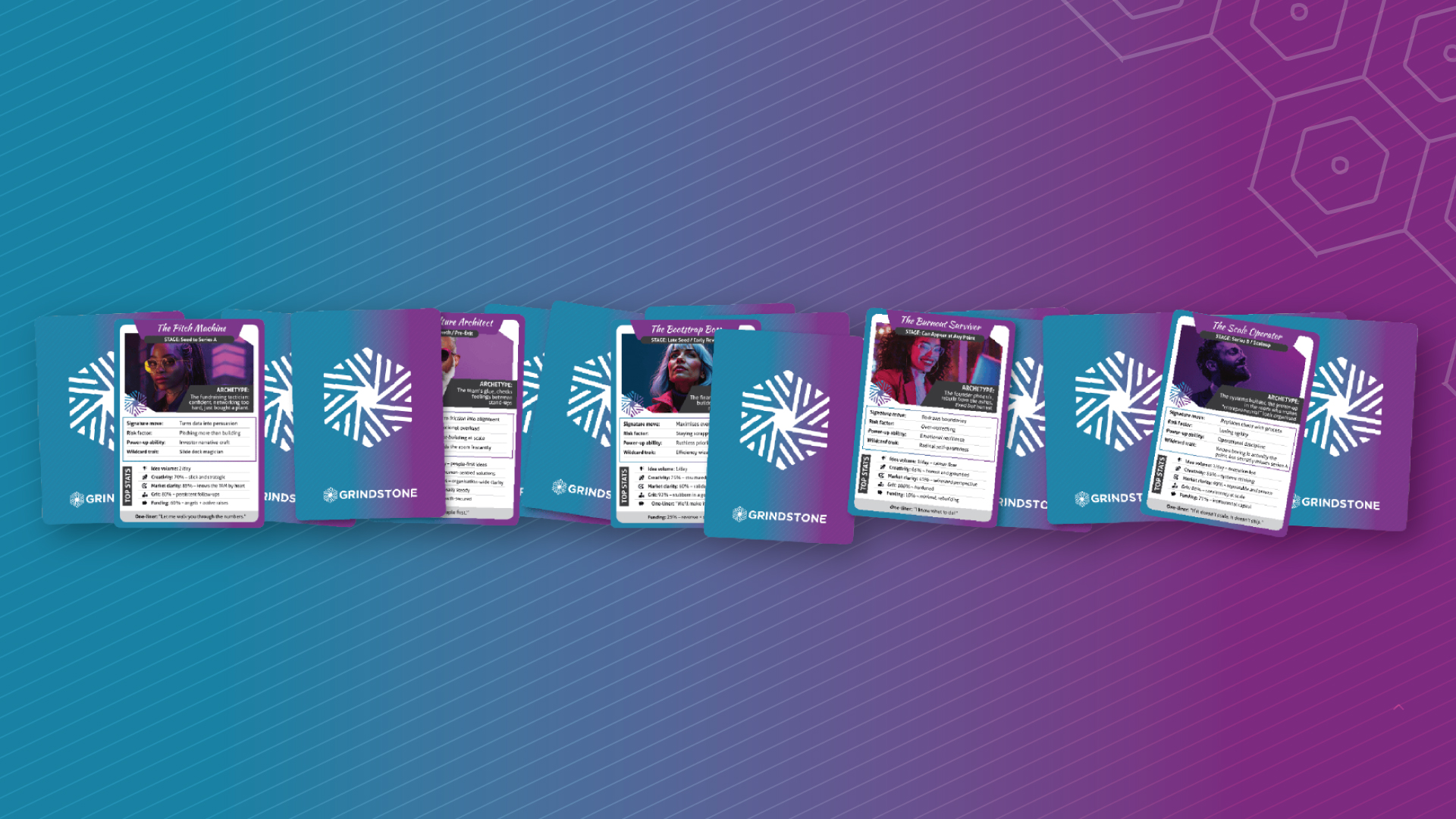
That idea sat at the centre of our 2025 year-in-review: a newsletter and social campaign built around founder “cards” that reflect the real startup growth stages we see every day in the Grindstone ecosystem. Some confident, some scrappy, some quietly holding it together, and some already thinking about what comes next.
This blog captures the thinking behind that campaign. Each card represents a moment we saw repeatedly in 2025 across the many startup growth stages. Together, they tell a story about where growth actually came from this year, what it demanded from founders, and lessons for the years ahead!
The idea stage: The Wide-Eyed Dreamer
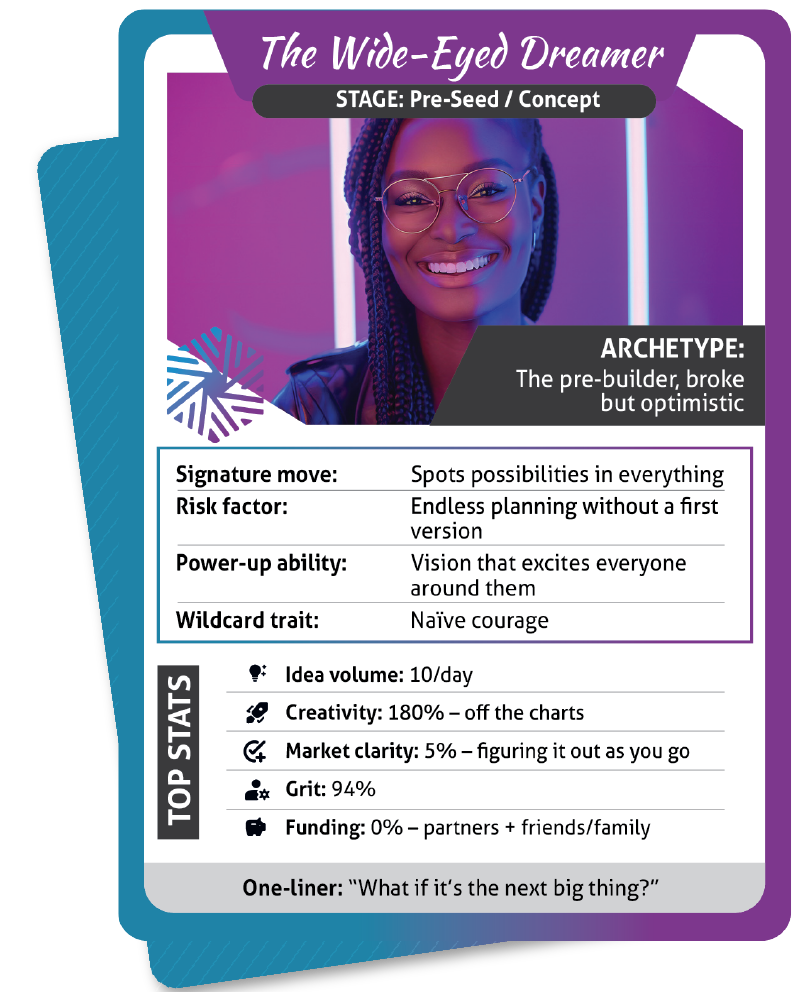
Some founders arrived with optimism and possibility, still close to the idea stage. What mattered most here wasn’t speed, but grounding.
We spent time pressure-testing assumptions, interrogating markets, and helping founders understand what traction actually looks like, especially in a year where funding was tighter and timelines stretched.
Belief is essential, but belief alone doesn’t build a business.
Early execution: The Scrappy Starter
Others were deep in experimentation mode. Things were launched quickly, changed often, and sometimes scrapped entirely.
Progress didn’t come from doing more.
It came from learning faster: knowing what was being tested, why it mattered, and when to stop.
Energy is useful; direction is what turns it into growth.
Driven by discipline: The Bootstrap Boss
As businesses found their footing, the work became quieter and more disciplined.
Revenue quality, capital efficiency, and early systems took centre stage.
These founders weren’t chasing headlines; they were building companies that could absorb growth without breaking. Sustainable progress consistently outperformed short-term spectacle.
Fundraising maturity: The Pitch Machine
Fundraising showed up as a strategic exercise rather than a performance.
The founders who made headway were clear on their numbers, honest about their positioning, and realistic about where they were in the journey.
Our role was to help translate traction into coherent, credible narratives that could stand up to scrutiny.
Behind the scenes: The Stealth Operator
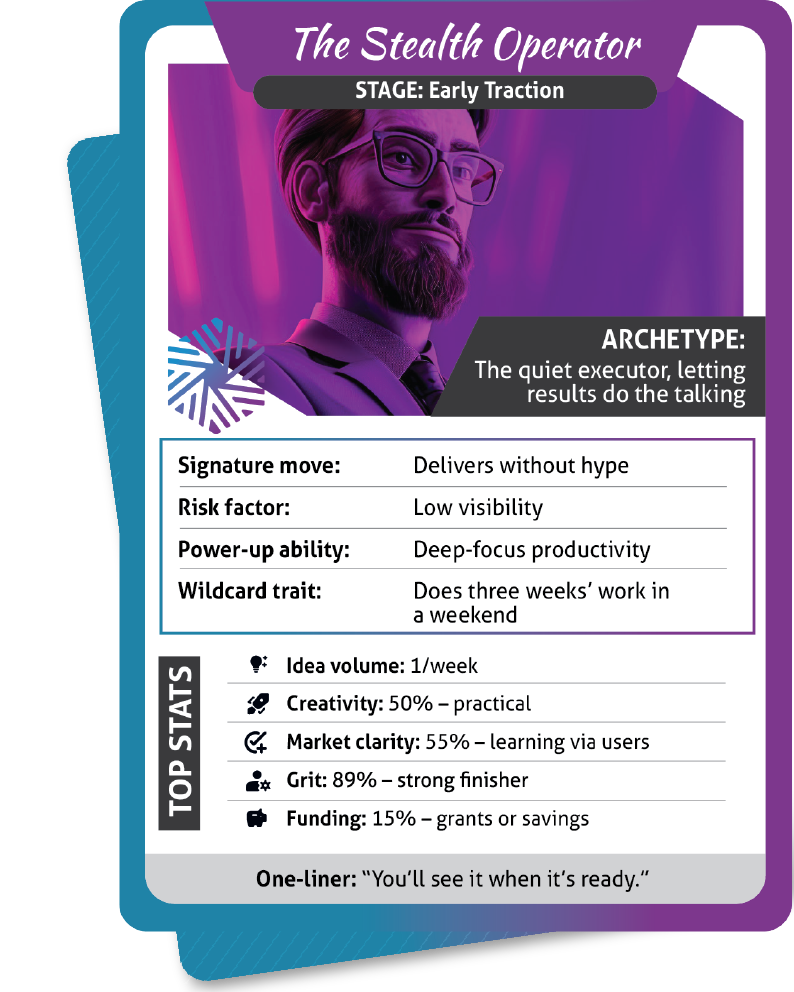
Some of the most important work this year happened quietly.
Behind the scenes, founders built relationships, navigated partnerships, and had difficult conversations that don’t make for flashy updates but do change trajectories.
Growth doesn’t always need visibility; it needs trust, timing, and the right connections.
Shaped by market feedback: The Pivot Artist
Pivots were a defining feature of 2025, but the strongest ones were driven by listening.
Founders responded to customers, not ego.
Products evolved, brands sharpened, focus narrowed.
The result wasn’t reinvention for novelty’s sake, but better alignment between what the market valued and what the business could deliver.
Growth after setbacks: The Comeback Kid
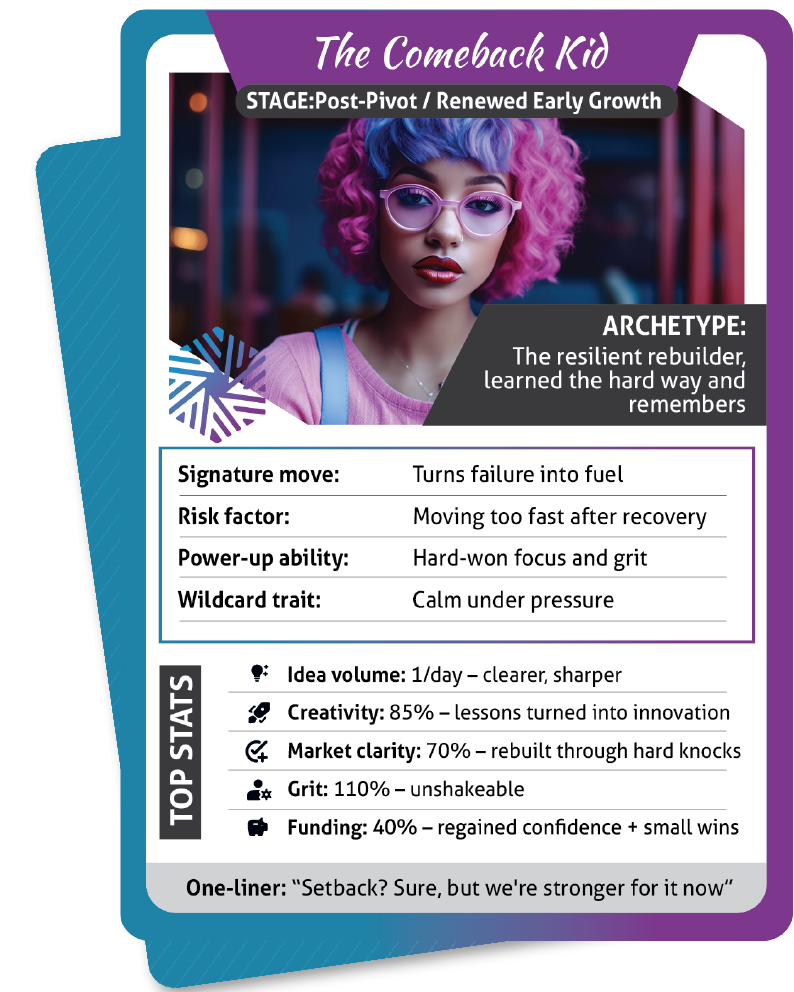
Setbacks happened. What mattered was how founders rebuilt.
Hands-on problem-solving, funding-readiness work, and structured interventions helped turn resilience into something practical.
Progress came from putting systems around momentum rather than relying on grit alone.
Founders like Phumi Körber (Kloset Klub), Serisha Barrat (Lawyered Up), Kimberly Taylor (Loop), Thapelo Nthite (Botlhale AI) and the teams behind Chicken Bar and Botlhale AI reflected this kind of hard-earned progress.
Under pressure: The Burnout Survivor (Wildcard)
Not all setbacks were visible, and not all recovery was about the business.
Some founders showed up exhausted, overloaded, or quietly running on empty.
Progress here meant pausing, rebuilding capacity, and learning when sustainability applied to the founder, not just the company.
Results-focused: The Traction Chaser
Traction became more than activity in 2025, it became proof.
Founders at this stage focused on repeatability, credible growth signals, and turning momentum into something investors, teams, and customers could rely on.
As complexity increases: The Scale Operator
As ambition grew, so did complexity. This stage demanded stronger governance, clearer decision-making, and operational maturity.
We supported founders in professionalising early, so growth felt intentional rather than fragile.
Scale rewards preparation.
When culture becomes strategic: The Culture Architect
Later-stage growth brought culture into sharp focus.
Leadership, trust, and shared ways of working became strategic tools, not soft considerations.
Alignment mattered more as teams grew and decisions carried greater weight. Strong organisations don’t leave this to chance.
Beyond growth: The Exit Philosopher
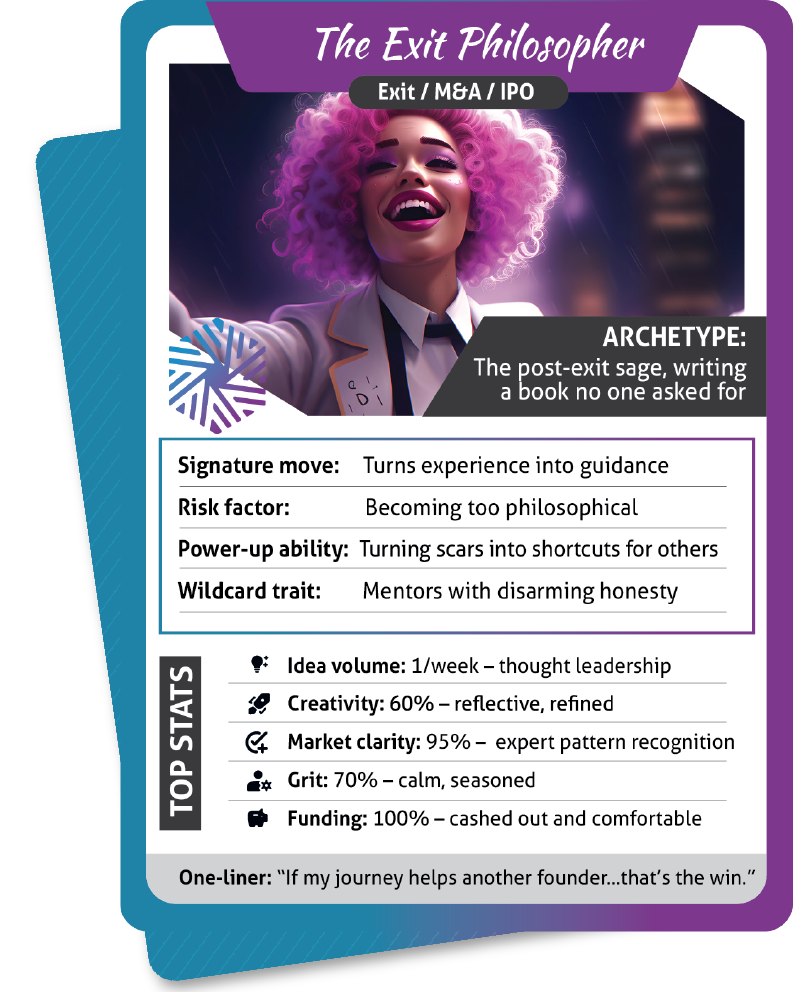
By year-end, some founders were already thinking beyond growth.
Exits, transitions, and long-term outcomes came into view. We continued embedding governance and funding readiness early, tackling a long-standing ecosystem challenge: turning scale into liquidity.
Exits aren’t endpoints; they’re knowledge assets.
Lessons from the startup growth stages
1.
Disciplined startup growth doesn’t announce itself
One of the strongest signals from this year was how much meaningful progress happened without noise.
The founders who stood out weren’t always the most visible.
Often, they were the ones tightening systems, asking better questions, and making decisions that wouldn’t trend on LinkedIn but would matter six months later.
At Grindstone, that’s where we spent most of our time. Pressure-testing ideas. Helping founders work out what traction really looks like. Supporting decision-making under constraint, not abundance.
2.
Experimentation, but with intent
There was no shortage of energy in the ecosystem. Pilots launched, campaigns tested, products tweaked and reworked.
What became clear was the difference between activity and learning.
Founders who made progress slowed down just enough to understand why something worked or didn’t work. Not everything needs to scale, but everything needs intent.
3.
Fundraising as strategy
The strongest founders didn’t treat fundraising as a pitch exercise. They treated it as an extension of strategy.
Clear narratives, grounded numbers, and honest positioning consistently outperformed over-polished storytelling.
Through panels, pitchrooms, and behind-the-scenes preparation, we focused on helping founders translate traction into credible investor conversations.
4.
Pivots that listened to the market
Some of the most impressive progress this year came from founders who changed course, not because it was trendy, but because customers told them to.
Rebrands, product shifts, sharper focus. When done well, these weren’t reinventions for the sake of novelty, but moves towards better alignment between market demand, business model, and execution capability.
Grindstone made some deliberate shifts too, strengthening long-term sustainability, evolving how support is funded, and creating space for leadership transition. The same principle applied: listen carefully, then act decisively.
5.
Founder resilience as a system, not a slogan
Setbacks happened. What mattered was what founders did next.
Workshops, problem-solving sessions, and funding-readiness programmes helped turn resilience into something repeatable, not just bouncing back emotionally, but rebuilding operationally.
The progress we saw reflected not only personal grit, but the value of structured support at the right moment.
6.
Culture shows up when things get complex
As companies grow, leadership and alignment become as important as product and capital.
This year reinforced that culture isn’t a “later” problem. Trust, shared ways of working, and clarity of roles are strategic tools, especially as organisations become more complex.
7.
Exits aren’t the end of the story
If there was one long-term theme running through 2025, it was this: exits are not endpoints.
They are knowledge assets.
By amplifying lessons from successful exits and embedding governance and readiness early, we continued addressing one of the ecosystem’s toughest challenges: turning growth into liquidity, not just headlines.
Startup growth stage secrets revealed
Startup growth doesn’t belong to a single stage or personality type.
It belongs to founders who adapt, reflect, and build with intent, wherever they are on the journey.
That’s what the cards in our newsletter and campaign represent. Not labels, but moments.
And a reminder that real growth rarely looks the way we expect it to.
Wherever you found yourself among these moments, we’re glad you were part of it.
Read the newsletter, follow the campaign on LinkedIn or explore our programmes for more!
.jpg)